Blockchain and its working

A blockchain, originally block chain, is a continuously growing list of records, called blocks, which are linked and secured using cryptography. Each block typically contains a cryptographic hash of the previous block, a timestamp and transaction data.
A blockchain is the structure of data that represents a financial ledger entry, or a record of a transaction. Each transaction is digitally signed to ensure its authenticity and that no one tampers with it. So the ledger itself and the existing transactions within it are assumed to be of high integrity.
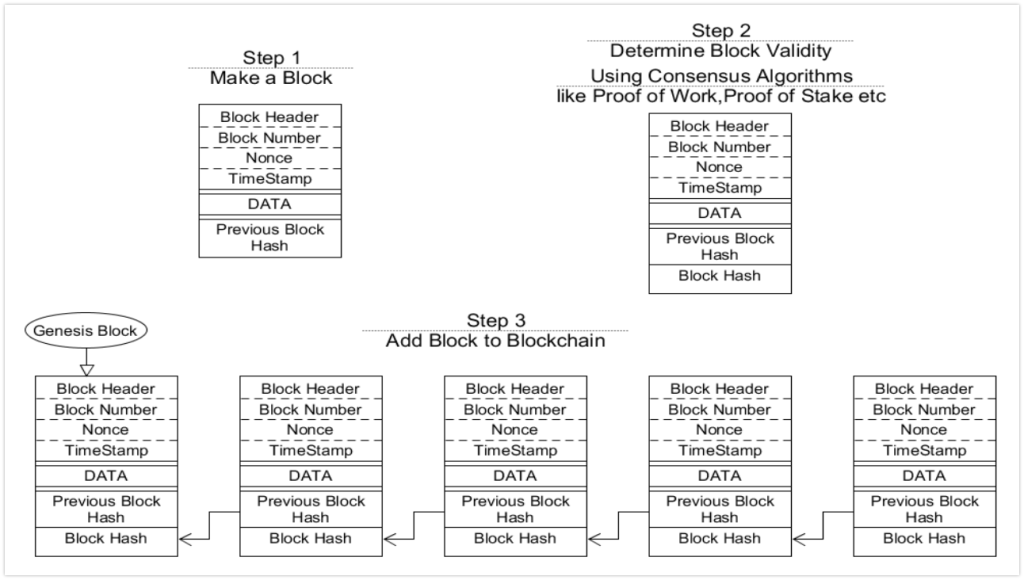
When a new transaction is made, generally a majority of the nodes within a blockchain executes some algorithms, evaluate and verify the history of the individual blockchain blocks that are proposed, and come to a consensus that the history and signature is valid, then the new transaction is accepted into the ledger and a new block is added to the chain. If a majority of nodes do not concede to the addition or modification of the ledger entry, then it is denied and not added to the chain.
Who invented?
- The first work on a cryptographically secured chain of blocks was described in 1991 by Stuart Haber and W. Scott Stornetta.
- In 1992, Bayer, Haber and Stornetta incorporated Merkle trees.
- The first blockchain was conceptualized by a person known as Satoshi Nakamoto in 2008.
Is it Secure?
Yes, One of the most secure examples of blockchain is bitcoin. It’s a well-publicized fact that some exchanges for buying and selling bitcoin currency have had security issues. But blockchain — the underlying technology for all digital currencies — has never been manipulated to date. Cryptography secures the records in a blockchain transaction, and each transaction is tied (in the chain) to previous transactions or records. In addition, the transaction records are distributed among and viewable by all participants of a blockchain distributed ledger. An attempt to tamper with the data would require that the hacker also change all the previous hash inputs in the blockchain.
Applications
- Digital Currency Transactions: Bitcoin, Etherium
- Cloud Storage: Storj
- E-voting
- Disintermediation
Disadvantages
- Performance
- Uncertain Regulatory Status
- Large Energy Consumption
- Cultural Adoption
Inside Blockchain
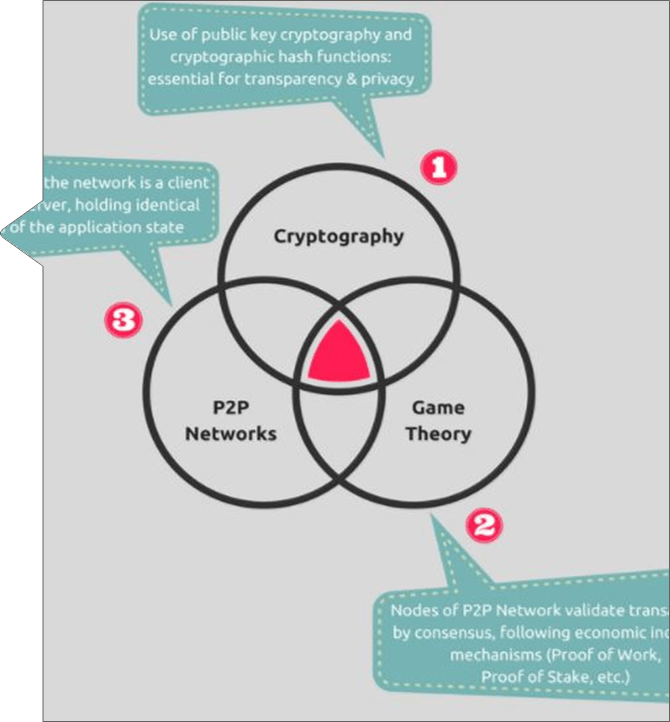
What are blocks in blockchain?
- Blocks hold list of valid transactions Each block includes the hash of previous Block It is like a chain of blocks from the genesis block to the current block.
- Blockchain is constantly growing as new completed blocks are added with new set of recordings Blocks are added in a linear, chronological order It is impossible to modify a block once it is part of the chain for a while.
- Each block consist of:
- A block number
- An arbitrary number called nonce
- The data to be recorded
- The hash string of the previous block
- Its hash string
The First Block Of Block Chain
A genesis block is the first block of a block chain. Modern versions of Bitcoin number it as block 0, though very early versions counted it as block 1. The genesis block is almost always hardcoded into the software of the applications that utilize its block chain. It is a special case in that it does not reference a previous block, and for Bitcoin and almost all of its derivatives, it produces an unspendable subsidy.
What is blockchain address?
- A blockchain address is an identifier of 26-35 alphanumeric characters, beginning with 1 or 3. Two address formats are P2PKH (Pay To Public Key Hash) begins with 1, 1AwCNTFZtuXfurUGo5Bv4n4HGg7xJaOVN3.
- Newer P2SH begins with 3, 3K98u1WpEZ73CNmQvifcrnyiXrnqRhWNMz.
- Address is like your email address and to receive payment, you need to share your address with the payer.
References
- https://blockgeeks.com/guides/what-is-hashing/
- https://theconversation.com/bitcoin-might-not-change-the-world-but-the-blockchain-that-makes-it-work-might-52516
- https://www.forbes.com/forbes/welcome/?toURL=https://www.forbes.com/sites/jonathanchester/2017/03/03/how-the-blockchain-will-secure-your-online-identity/&refURL=&referrer=
- https://www.coindesk.com/bitcoin-hash-functions-explained/
- https://blockchainhub.net/blog/blog/cryptography-blockchain-part-1/
- https://hackernoon.com/blockchain-for-voting-and-elections-9888f3c8bf72
- http://techgenix.com/blockchain-technology-for-cloud-storage/
 Vector's Blog